SnowFit
How to Start a Gym in India
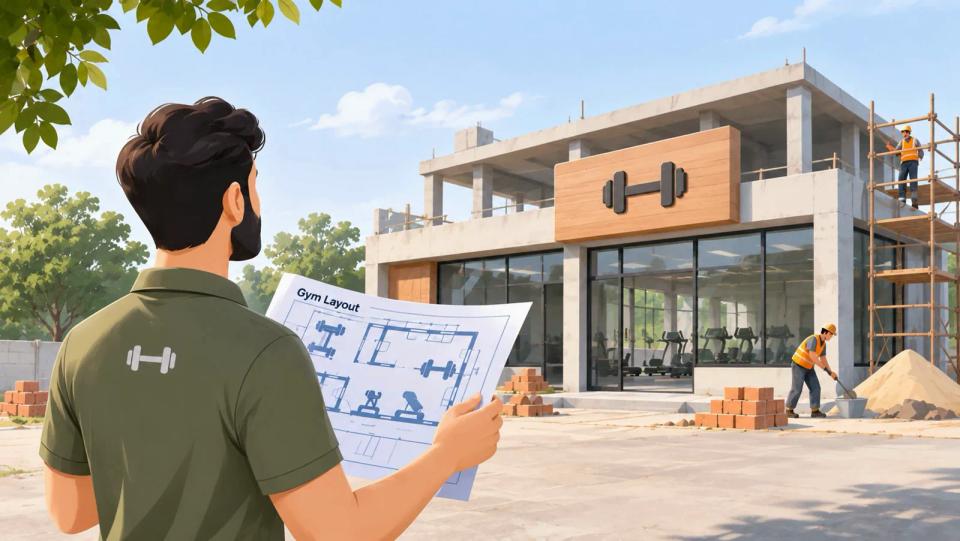
You've trained for years, you know what a good gym feels like, and now you want your own. The hard part of learning how to start a gym in India isn't the equipment list. It's the decisions you make before you buy a single dumbbell: where you open, what it really costs each month, and what you charge so the numbers still work in month six. This guide walks through those decisions in the order you'll face them, with the maths laid out so you can plug in your own.
How to start a gym in India: the short version
To start a gym in India, you choose a location with enough people living or working within about 15 minutes, work out your monthly running cost, and set a membership price that covers it with a realistic number of members. Then you register the business, get the municipal and fire approvals your city requires, fit out the space, hire trainers and open with a small founding-member offer.
Each of those steps has a trap in it. The rest of this guide is about the traps.
Step 1: Pick a location people can reach in 15 minutes
Most people won't travel far for a gym. If getting there means a 25-minute auto ride in traffic, they'll come for three weeks and stop. So the first question isn't "where is rent cheap?" It's "how many people live or work within a short ride of this place?"
Before you sign anything, do this for every space on your shortlist:
- Stand outside at 6:30 AM and 7:30 PM on a weekday. Those are your peak hours. Count the people walking past, and notice whether they're office-goers, college students or families.
- Count the gyms nearby and visit two of them as a customer. Ask the fee, look at how full the floor is, and read their Google reviews for complaints you could fix.
- Check the boring things. Ceiling height for cardio machines, a floor that can take heavy plates, enough washrooms, parking for two-wheelers, and whether there's power backup. A gym in a building with a three-hour power cut every afternoon will lose its evening batch.
- Read the lease twice. Ask for a rent-free period of one to two months for the fit-out, a lock-in you can live with, and a clear clause on the yearly rent increase.
Ground floor or upstairs? A first- or second-floor space is usually cheaper and quieter, and many successful neighbourhood gyms are upstairs. Just check that the building allows a gym, that the floor load is fine, and what the fire rules say for that floor before you commit.
Step 2: Work out what the gym really costs
There are two numbers you need: what it costs to open, and what it costs every month after that. New owners plan carefully for the first and underestimate the second.
What it costs to open
Setup cost depends on size, city and how much equipment you buy new. Published estimates are wide: lender and consultancy guides put a small studio at roughly ₹5–15 lakh and a standard commercial gym at ₹15–50 lakh, with premium and franchise gyms well above that. Treat those as a rough frame and get three quotes for every big item.
| Item | What drives the cost | Tip |
|---|---|---|
| Security deposit and advance rent | Your city, the floor, the landlord | Negotiate a rent-free fit-out period |
| Interiors | Flooring, mirrors, lighting, washrooms, AC | Spend on rubber flooring and ventilation first |
| Equipment | Commercial vs home grade, new vs used | Fewer cardio machines, more free weights |
| Licences and registrations | City and building | Budget for consultant fees if you use one |
| Software, website and launch | What you choose | Free tools exist for most of this |
| Working capital | Your monthly running cost | Keep at least three months aside |
The last row matters most. A new gym rarely breaks even in its first three months, and the owners who close in year one are often the ones who spent everything on machines and had nothing left for rent in month four.
What it costs every month
Write down every monthly cost, even the small ones. Here's a worked example for a mid-size gym in a tier-2 city. Swap in your own figures:
| Monthly cost | Example |
|---|---|
| Rent | ₹1,20,000 |
| Three trainers | ₹75,000 |
| Front desk and cleaning | ₹30,000 |
| Electricity | ₹40,000 |
| Equipment EMI | ₹60,000 |
| Maintenance, water, internet, small repairs | ₹20,000 |
| Total | ₹3,45,000 |
That total, ₹3.45 lakh a month in this example, is the number your membership price has to beat.
Step 3: Set your membership price
Your membership price should cover your monthly cost with the number of members you can realistically have, and it should sit sensibly against the gyms near you. Start from your costs, then check the market. Doing it the other way round is how gyms end up busy and broke.
Start from your break-even
Divide your monthly cost by what an average member pays you per month:
Members needed to break even = monthly cost ÷ average monthly fee
Using the example above, at an average of ₹1,500 a month you need 230 paying members just to cover costs (₹3,45,000 ÷ ₹1,500). At ₹1,200 you'd need 288. At ₹2,000 you'd need 173.
Now be honest about the area. If the neighbourhood realistically supports 180 members, ₹1,200 isn't a price, it's a slow loss. Either the fee goes up, the costs come down, or the location is wrong.
Then check the market
Visit the gyms near you and note their fees. As a rough national picture, consumer guides put budget gyms from about ₹800 a month and standard gyms at roughly ₹1,200–3,000, with premium clubs far higher. What matters is your street, not the national average.
You don't have to be the cheapest. Being ₹200 more than the gym down the road is fine if your floor is cleaner, your trainers actually train people, and the AC works in May.
Build the plan list
Most Indian gyms sell plans in lump sums, so design for that:
- Monthly at your full price. This is your anchor.
- Quarterly and half-yearly with a modest discount. These are what most members will buy.
- Yearly with the biggest discount, for the committed regulars.
- A one-time joining fee, which you can waive during your launch or in slow months instead of cutting the plan price.
- Personal training as an add-on, priced per session or per pack of 12.
Be careful with very cheap yearly plans. They feel great at the counter because the cash comes in on day one. But that money has to pay for twelve months of rent and salaries, and many yearly members stop coming by month four, which makes renewals harder the following year.
Step 4: Register the business and get the approvals
There's no single "gym licence" in India. What you need is a set of local and state registrations, and the exact list depends on your city and building. Confirm it with your municipal corporation and the state fire and labour departments before you open.
The usual set looks like this:
- A business structure. A sole proprietorship is simplest for a single gym; a partnership or private limited company makes sense if you have partners or investors.
- Municipal trade licence, from your city's municipal body. Some cities treat gyms under a health-trade category.
- Shops and Establishments registration under your state's act, which covers working hours, leave and staff conditions.
- Fire NOC from the state fire department, if your floor area, occupancy or floor level triggers it.
- GST registration once your turnover crosses the threshold (₹20 lakh for services in most states, ₹10 lakh in special-category states). Gym services are taxed at 18%.
- A music licence if you play recorded music on the floor. These come from the copyright societies for sound recordings and songs.
If you sell protein shakes or snacks at the counter, check the food-safety registration rules too. And keep copies of everything at the desk; an inspector visit in month two is not the time to hunt for a PDF.
Step 5: Buy equipment for how people actually train
The most common mistake is buying for the photo instead of the floor. A row of eight treadmills looks impressive on Instagram, but on a normal evening most of them sit empty while people queue for the one squat rack.
A few rules that hold for most neighbourhood gyms:
- Buy commercial-grade for anything that takes a beating: cables, benches, racks and the cardio machines you do buy.
- Spend more on free weights than you think. Dumbbells, plates, barbells, benches and two good racks will be used every hour you're open.
- Start with fewer cardio machines and add more once you see your peak-hour crowd.
- Ask about warranty and service in your city, not just the price. A broken treadmill that waits three weeks for a technician costs you more than the discount you got.
- Leave open floor space for functional training and group classes. It's the cheapest area of the gym and often the busiest.
Step 6: Hire trainers and set up the front desk
Members join for the place and stay for the people. A trainer who knows every member's name and notices when someone skips a week is worth more than a new machine.
Hire certified trainers, but also watch how they talk to a beginner. Put clear rules in writing about personal training, so it's obvious which clients belong to the gym. And plan for trainers leaving, because they will; a gym that runs on one star trainer loses members when that trainer moves on.
Set up the front desk before opening day, not after. Decide how you'll record members, collect fees on UPI and cash, and remind people when their plan ends. A paper register works for the first fifty members and then falls apart. We wrote about what to look for in the best gym management software in India, and SnowFit is free gym management software if you'd rather not add another monthly cost while you're still building up members.
Step 7: Launch, then focus on the first 90 days
Open two to four weeks before you feel ready, with a soft launch for friends, neighbours and the people who stopped by during the fit-out. Offer a founding-member price for the first 50 or 100 people, with a clear end date, so it doesn't become your permanent price.
Before launch, get the basics online:
- A Google Business Profile with your address, timings, photos and phone number. Most people will find you by searching "gym near me".
- A simple website with a trial-booking form, so enquiries come to you even at night. Our guide on how to create a gym website shows how to set one up in an afternoon.
- An Instagram page with real photos of the floor, the trainers and the batch timings.
- WhatsApp ready at the desk, because that's where your enquiries and reminders will live.
Then watch the first 90 days closely. Your January joiners will decide whether you have a business in April. Welcome every new member on day one, check in during their second week, and remind them before their plan ends. We covered this in detail in 5 proven ways to improve gym member retention in India, and 5 gym automations that save you 5 hours every week shows how to stop typing those reminders by hand.
Frequently asked questions
How much does it cost to start a gym in India?
It depends heavily on size and city. Lender and consultancy guides put a small studio at roughly ₹5–15 lakh and a standard commercial gym at ₹15–50 lakh. Plan for at least three months of running costs on top of the setup cost, because most new gyms take a few months to break even.
What licences do I need to open a gym in India?
There's no single gym licence. Most gyms need a municipal trade licence, Shops and Establishments registration, a fire NOC if the building requires one, GST registration once turnover crosses the threshold, and a music licence if they play recorded music. Confirm the list with your municipal corporation.
How much should I charge for a gym membership in India?
Start from your break-even: divide your monthly running cost by a realistic number of members. Then compare with gyms near you. Standard gyms in India commonly charge around ₹1,200–3,000 a month, with budget gyms lower, but your locality matters more than any national average.
Is a gym a profitable business in India?
It can be, once you have enough paying members to cover rent, salaries and equipment payments every month. Profit depends far more on keeping members and getting renewals than on the number of people who join in January.
How long does it take for a new gym to break even?
There's no fixed timeline. It depends on your monthly costs, your fee and how quickly you reach your break-even number of members. Many owners plan for several months of losses and keep that money aside before opening.
The bottom line
Before you look at a single machine, work out your monthly cost and the number of members you need to cover it. If that number feels possible for the location you've found, you're ready for the rest. When you open, set up your members, fees and WhatsApp reminders in SnowFit from day one. Start using SnowFit free.